


Cybersecurity is often discussed in terms of software, monitoring and procedures. On the ground, physical security usually starts somewhere much simpler: the rack.
Firewalls, routers, edge appliances and industrial gateways are only protected if they are physically fixed, enclosed and controlled. How equipment is mounted inside a 19” rack directly determines who can access it, how easily it can be tampered with and how well installations can be audited.
NIS2 raises expectations for physical infrastructure
NIS2 requires organizations to protect their network and information systems through appropriate technical and organizational measures. While the directive does not prescribe how this must be done, it clearly includes physical and environmental security.
For many organizations, this means re-evaluating:
-
Open racks versus closed cabinets
-
Lockable rack doors and side panels
-
Standardized mounting of critical appliances
-
Physical access control to network cabinets at edge and branch locations
ISO/IEC 27002 physical security controls in real-world rack environments
ISO/IEC 27002:2022 control A.7.1 (Physical security perimeters) requires organizations to define and protect physical security boundaries around information processing facilities. In practice, this perimeter can take many forms: a secured data center room, a locked technical space, or a lockable cabinet or rack in less controlled environments such as retail locations, branch offices or industrial sites.
Once this physical perimeter is established, A.7.8 (Equipment siting and protection) becomes the primary control that governs how equipment is installed and protected within that perimeter.
For rack and cabinet installations, this translates into concrete, auditable measures such as:
-
Devices are firmly mounted in racks, not placed loose on shelves or stacked on other equipment
-
Cabinets are lockable, preventing unauthorized or casual access to installed systems
-
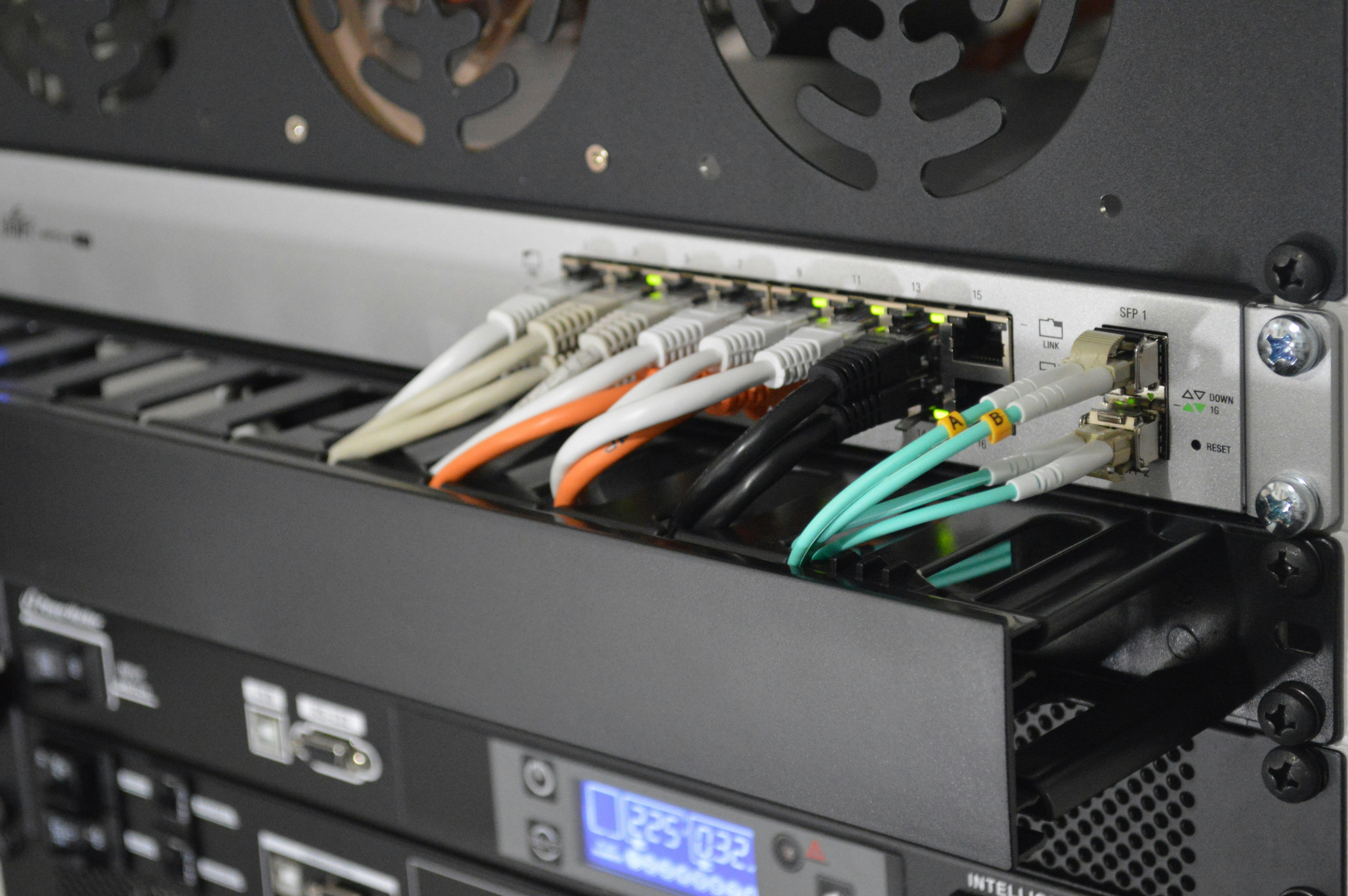
Front-facing connections reduce the risk of tampering, accidental disconnection or unmanaged cabling at the rear
-
Consistent rack layouts improve protection, airflow, maintenance and audit clarity
These measures ensure that equipment is not only located inside a defined physical security perimeter (A.7.1), but also properly protected against environmental risks, manipulation and unauthorized access, as required by A.7.8, with supporting relevance from A.7.2 (Physical entry controls) and A.7.11 (Supporting utilities).
This approach applies far beyond traditional data centers and is especially relevant in distributed IT environments where racks and cabinets often are the primary physical security boundary.
Common physical risks
In many installations, physical risk is introduced unintentionally. Typical examples include:
-
Firewalls or edge appliances resting on a shelf inside an open cabinet
-
Desktop appliances mounted sideways or unsecured
-
Power adapters and cables hanging loose behind racks
-
Devices installed in cabinets without airflow considerations, increasing failure risk
-
Different mounting methods at every location, making audits inconsistent
These setups make it harder to define a physical security perimeter and easier to interfere with critical equipment.
How rackmount kits reduce physical risk
A dedicated rackmount kit helps organizations move from improvised setups to structured infrastructure.
In practice, this means:
-
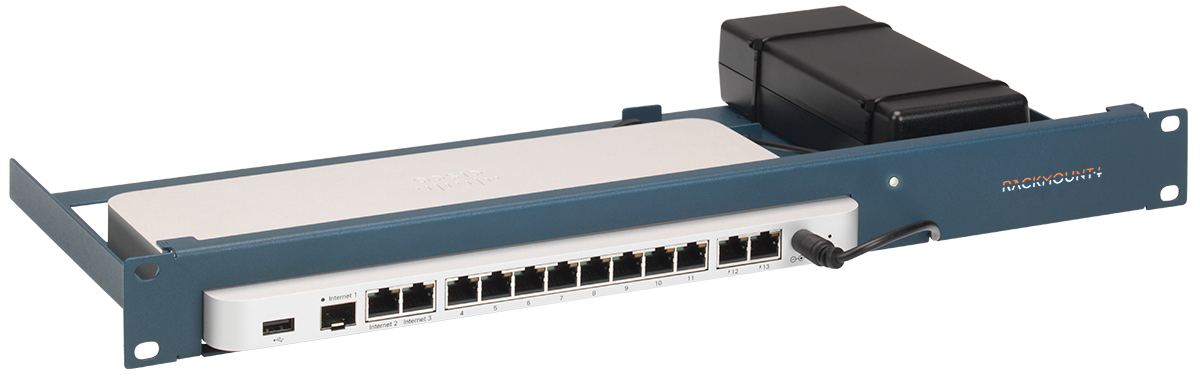
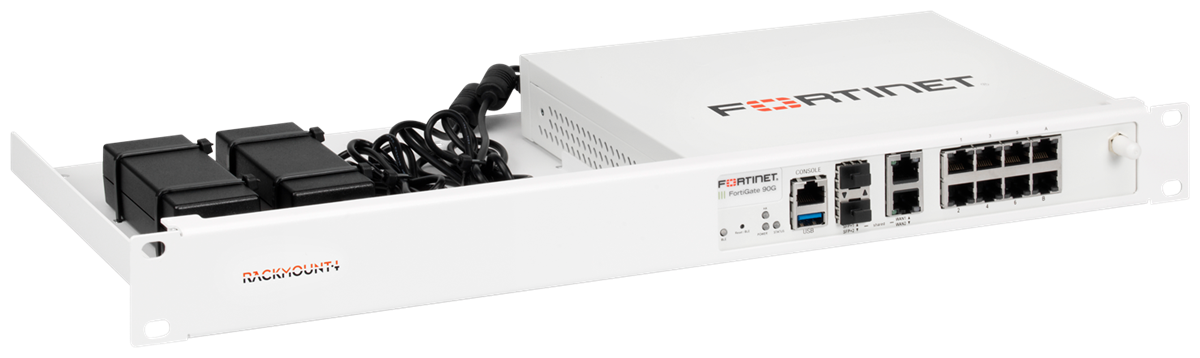
Appliances are firmly fixed in the rack, preventing removal or repositioning
-
Equipment sits behind lockable cabinet doors, forming a clear physical boundary
-
Power and network connections are routed neatly and consistently
-
Devices can only be accessed from the front, within the secured rack space
-
Installations look the same across locations, supporting repeatable audits
This structure supports both security and operational efficiency.
Examples across different environments
Branch offices and retail
Firewalls and switches are often installed in small wall-mounted cabinets. Using rackmount kits ensures devices are fixed in place, protected behind a locked door and not accessible to non-IT staff.
Edge and distributed locations
Edge appliances processing local data benefit from standardized mounting. Rackmounting prevents devices from being unplugged or moved during maintenance or cleaning activities.
Industrial and OT environments
In factories, cabinets are exposed to vibration, dust and limited space. Rackmount and DIN rail solutions allow standard IT appliances to be securely mounted in industrial 19” cabinets, reducing both physical risk and custom engineering costs.
Rackmount.IT as a practical security enabler
At Rackmount.IT, we design rackmount solutions that turn security principles into physical reality.
Our rackmount kits enable:
-
Secure and fixed mounting of desktop appliances
-
Integration into lockable 19” cabinets
-
Consistent rack layouts across locations
-
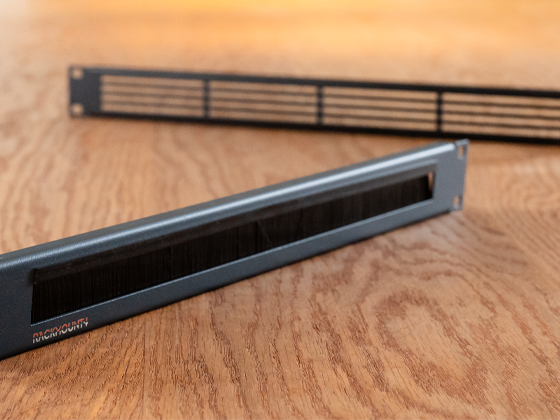
Clean cabling and controlled access points
We do not claim compliance. We support organizations in building physical installations that align with recognized security frameworks and regulatory intent.
Infrastructure choices define physical security
As environments become more distributed, physical control becomes harder to maintain.
Clear rack structures, secure cabinets and standardized mounting are no longer just “nice to have”. They are part of how organizations protect systems, reduce risk and stay in control at scale.
Physical security perimeters are not theoretical.
They are built one rack, one cabinet and one mounted device at a time.
Ready to benefit today?
Contact us directly – we’ll be happy to refer you to one of our trusted distribution partners in your region.